

In business — whether you’re a freelancer, agency, or an in-house service provider — certain client personalities can make working together a real challenge. These “difficult” clients vary in their behavior, motivations, and triggers.
Understanding their types and knowing how to manage them isn’t just good for your sanity — it’s essential for protecting your time, your margins, and your reputation.
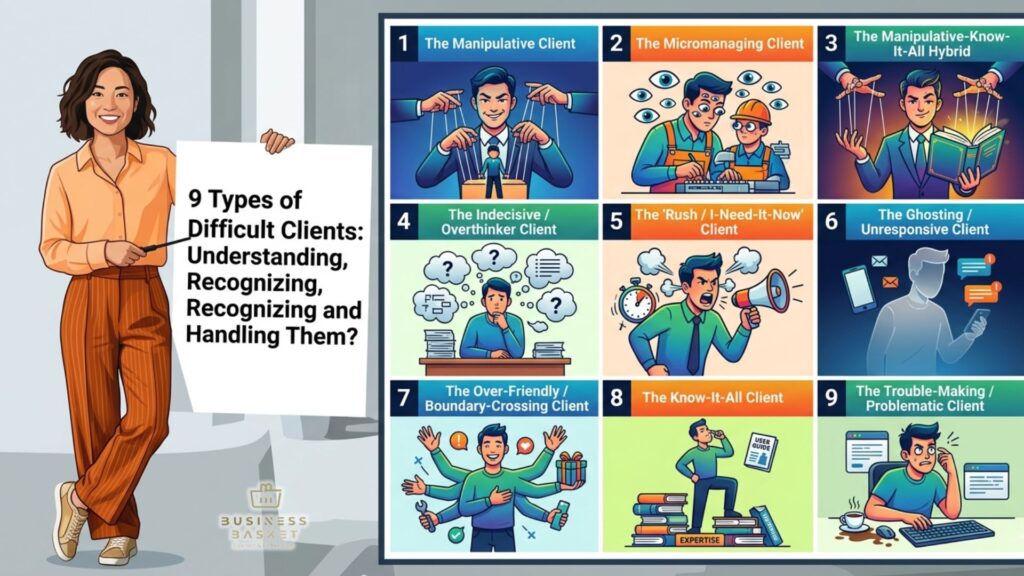
Below, we’ll dive into 9 common difficult client types, the typical situations they show up in, and best practices for handling them.
1. The Manipulative Client
What they’re like:
The manipulative client uses emotional pressure, guilt, or strategic charm. They may hint that you’re not delivering because you don’t “care enough,” compare you to cheaper vendors, or subtly threaten to take their business elsewhere. Their aim is often to push more work, cut prices, or get extra “free” favors.
When you might meet them:
-
During contract negotiations, when they try to guilt you into lowering your rate.
-
Midway through a project, when they ask for “just one more change” or “just one more small thing”, often without recognizing its impact on scope.
-
As a recurring retainer client, when they push for lower hours or more deliverables “just because they’re loyal.”
How to handle them:
-
Document everything — Every request, cost, conversation. Use written records (emails, proposals) to refer back to agreed scope. This protects you and prevents scope creep.
-
Be factual, not emotional — When they try guilt, respond with data: “Here’s what we agreed on. Here’s what this extra request changes.”
-
Set boundaries clearly — Establish what is included in the contract (deliverables, revision limits, communication cadence) so you can say “no” without apologizing.
-
Use positive, assertive language — For example: “I understand why you want this change. Based on our agreement, this would require additional time / cost. Here are some options.”
-
Know when to walk away — If manipulation becomes constant, or they cross boundaries repeatedly, it may be healthier to terminate the relationship professionally.
2. The Micromanaging Client
What they’re like:
They want constant updates. They check in on every deliverable, often before it’s finished, and may request changes after every small milestone. Their involvement feels more like managing their own team than trusting a professional.
When you might meet them:
-
In the early stages of a project, when they don’t yet trust your process or experience.
-
On long-term contracts, when anxiety about results or control creeps in.
-
In creative or technical work, where they think they know exactly how things should be done.
How to handle them:
-
Set a regular update schedule — Agree on weekly or biweekly check-ins so they don’t need to ping you constantly.
-
Use milestones — Break down work into clear phases so they can review at predefined points (not ad hoc).
-
Retain control through structure — If they ask for too-frequent changes, gently remind them of the project plan and how changes affect timelines / costs.
-
Mirror communication style when appropriate — Matching their way of speaking (tone, pace) can help bridge trust.
-
Document changes and approvals — For every “small” change, record what was agreed in writing.
3. The Manipulative-Know-It-All Hybrid (mix of manipulative + know-it-all)
What they’re like:
This client not only tries to emotionally pressure you but also acts as though they are experts in your field. They may dismiss your expertise, constantly demand you justify your decisions, or offer (unsolicited) advice — while simultaneously expecting extra concessions.
When you might meet them:
-
In industries where clients have some domain knowledge (marketing, design, development) and feel they should have a say in technical details.
-
When a client has worked with many vendors before, so they feel confident giving “feedback” from their past experiences.
-
At the negotiation phase, when they try to assert that they already know how things “should” work.
How to handle them:
-
Use data and examples — Back up your decisions with case studies, analytics, or past work.
-
Offer limited, structured choices — Instead of open-ended “what do you want?”, give them 2–3 vetted options, with pros and cons.
-
Restate decisions in writing — After conversations, send a summary email with what was agreed, and ask them to confirm.
-
Acknowledge their input, but stay firm — “I appreciate your thoughts; here’s why I prefer Option A, given our goals + constraints.”
-
Push back when needed — If they demand things outside of scope, refer to contractual boundaries or renegotiate.
4. The Indecisive / Overthinker Client
What they’re like:
They struggle to make decisions. They might ask for many versions, second-guess their own requests, or delay approvals. This can stall projects and lead to “analysis paralysis.”
When you might meet them:
-
During creative projects like branding, design, or strategy — where there are many possible directions.
-
In corporate settings where approval must go through many stakeholders.
-
When clients are inherently cautious or risk-averse.
How to handle them:
-
Limit the number of options — Give them 2–3 strong proposals instead of 10.
-
Use a decision framework — Provide pros, cons, and potential outcomes for each option.
-
Set deadlines — Make your process time-bound. For example, “Please pick your top choice by Friday so we can move forward.”
-
Remind them of cost/time tradeoffs — Explain how additional rounds of feedback impact budget or schedule.
-
Summarize in writing — After meetings, send a recap with decisions, next steps, and dates to encourage clarity.
5. The “Rush / I-Need-It-Now” Client
What they’re like:
Always asking for fast turnarounds, last-minute deliverables, or “emergency” work. They may not plan well or simply believe everything can always be done faster.
When you might meet them:
-
In high-pressure industries (marketing campaigns, event planning, product launches).
-
When a client realizes too late they missed deadlines or didn’t brief you early enough.
-
In startups or small companies that are more reactive than strategic.
How to handle them:
-
Charge a rush fee or premium — Price the urgency accordingly to compensate for disruption.
-
Manage expectations — Be honest about what can be done in a short timeframe and what might be compromised (quality, depth).
-
Negotiate realistic deadlines — Push back diplomatically: “If we move the deadline to X, I can deliver Y with better quality.”
-
Use a structured process — Even for rush jobs, use clear milestones and signoffs.
-
Decide when to say no — Sometimes a rushed job isn’t worth sacrificing your standards or overworking yourself.
6. The Ghosting / Unresponsive Client
What they’re like:
They disappear for days or weeks. They don’t respond to emails, skip check-ins, or delay approvals. When they do reappear, decisions need to be made quickly, causing bottlenecks.
When you might meet them:
-
After onboarding, when the initial enthusiasm fades.
-
During long projects with intermittent feedback cycles.
-
With clients who are very busy, have other priorities, or lack commitment.
How to handle them:
-
Set check-in cadence upfront — Agree on a regular meeting schedule from the beginning so “ghosting” is less likely.
-
Send reminders — Use email summaries plus gentle nudges (“just checking in on this item”).
-
Use deliverables to re-engage — Present a milestone or draft to spark feedback.
-
Implement staged payments / sign-off — Ask for partial payments or approvals to keep them locked in.
-
Reassess relationship — If they consistently vanish and disrupt progress, consider whether it’s wise to continue.
7. The Over-Friendly / Boundary-Crossing Client
What they’re like:
They try to blur the line between friendship and business. While nice, they may expect “favors,” informal working hours, or extra personal attention — and can make things emotionally complicated.
When you might meet them:
-
With local, repeat clients.
-
In small or creative industries where relationships are more personal.
-
When clients share personal stories, reach out outside work hours, or treat you more like a confidante than a service provider.
How to handle them:
-
Keep communication professional — Use business emails, formal meeting times, and clear agendas.
-
Set boundaries early — Define work hours, scope of “extra” work, and your availability.
-
Reaffirm the working relationship — Politely redirect when things become too personal: “I love hearing about that, but let’s focus on the project right now.”
-
Use contracts — Even for “friendly” clients, get your agreement in writing.
-
Be kind but firm — Maintain warmth, but don’t compromise your professionalism or capacity.
8. The Know-It-All Client
What they’re like:
They think they’re experts in your field, often second-guess your decisions, offer unsolicited advice, or challenge you at every turn. While they can be respectful, their constant questioning can undermine your authority.
When you might meet them:
-
In technical fields (design, marketing, engineering) where clients have partial knowledge.
-
In long-term projects where trust hasn’t fully developed.
-
When clients have had bad experiences before and feel they “need to be in control.”
How to handle them:
-
Acknowledge their input — Respect their views, but frame your expertise: “I appreciate your perspective; here’s why I recommend this…”
-
Limit options — Don’t overwhelm them; instead, present your recommended approach + two alternatives.
-
Use data / evidence — Share examples, case studies, or metrics that support your strategy.
-
Document decisions — Write meeting notes, confirm decisions via email, and ask for their agreement.
-
Push back politely — When necessary, re-anchor the discussion to goals: “I hear your suggestion, but I believe the main priority is delivering on our agreed objective. Here’s how we get there.”
9. The Trouble-Making / Problematic Client (Your original mention)
What they’re like:
They’re frequently unclear, demanding, or inconsistent. They might change their mind often, argue about deliverables, or be generally difficult to please.
When you might meet them:
-
During scoping / onboarding, where requirements aren’t clearly defined.
-
When the project evolves and they add or remove features, sometimes mid-work.
-
When feedback cycles are messy, and they haven’t thought through what they actually want.
How to handle them:
-
Clarify the scope early — Use a detailed brief, contract, and statement of work.
-
Set boundaries — Define how many revisions, what kind of feedback is allowed, and when “change requests” are out of scope.
-
Use active listening — Reflect their concerns back to them, show empathy, and ask clarifying questions.
-
Keep written records — Send meeting summaries, confirm decisions, and have a trail to refer back to.
-
Be ready to walk away — If they continually disrespect agreements, or demands escalate, it may be healthier to end the relationship professionally.
Why It Matters: The Impact of Difficult Clients
Dealing with challenging clients is not just a “soft skill” problem — it has real business consequences:
-
Time drain: Difficult clients take longer to satisfy, slowing down your capacity for other work.
-
Cost bleed: Scope creep, constant revisions, and rush demands cut into profitability.
-
Emotional burnout: High-stress relationships wear on your energy, creativity, and mental health.
-
Reputation risk: Poorly managed client interactions can lead to negative word-of-mouth or damaging reviews.
-
Missed opportunity to improve: On the flip side, handling these clients well can sharpen your processes, strengthen contracts, and refine your communication — turning challenges into growth.
Best Practices for Managing Difficult Clients (Across Types)
Here are cross-cutting strategies that work across many difficult client types:
-
Set clear expectations from the start: Use a written contract or scope document to define deliverables, revisions, communication norms, and payment terms.
-
Communicate proactively: Don’t wait for problems to escalate — check in regularly, surface issues early, and provide status updates.
-
Listen actively and empathetically: Make sure you truly understand concerns, and validate their feelings before responding.
-
Use assertive, positive language: Focus on solutions rather than blame.
-
Document everything: From conversations to agreements, keep records you can refer back to.
-
Know when to end the relationship: Your business is better off without clients who consistently cross boundaries, demand too much, or disrespect your process.
-
Reflect and improve: After tough client interactions, take time to analyze what went wrong and what you can do differently next time.

Real-World Examples & Scenarios
To make this more concrete, here are three fictional but realistic scenarios illustrating different client types and how to navigate them:
-
Scenario A: The Manipulative Client
Clara hired you to design her brand. Halfway through, she says she “thought you cared more” and demands three more logo variations for free. You respond by summarizing the original deliverables, pointing out that the extra options are outside scope, and offering a paid add-on. You document the conversation, set clear terms, and deliver the extra options only when she agrees to the extra cost. -
Scenario B: The Micromanaging Client
David is a highly detail-oriented VP at a corporation. He wants to review every draft slide, comment on fonts, layouts, and even specific images. You establish a weekly check-in (via virtual meeting), send a project plan with milestones, and limit the number of feedback rounds. You also gently guide him by giving 2–3 refined design directions instead of dozens of half-finished options. -
Scenario C: The Ghost Client
Sarah, a startup founder, is initially enthusiastic, but after a few weeks she vanishes. When she returns, she posts urgent feedback and expects fast changes. To manage this, you agreed upfront on a fortnightly report + approval cadence, send reminder emails when feedback is due, and institute a “review window” after each deliverable. If she misses that window, you proceed with a default next step, reducing blockages.
Conclusion
Working with difficult clients is almost unavoidable — but the way you understand them, prepare for them, and respond to them can make all the difference. Whether you’re dealing with a manipulative client, a micromanager, a ghost, or someone who mixes multiple challenging traits, having a clear strategy empowers you. It protects your time, preserves your mental well-being, and strengthens your business.
By setting firm boundaries, clarifying expectations, building in structured communication, and being willing to walk away when necessary, you can navigate even the most demanding client relationships with professionalism and confidence.