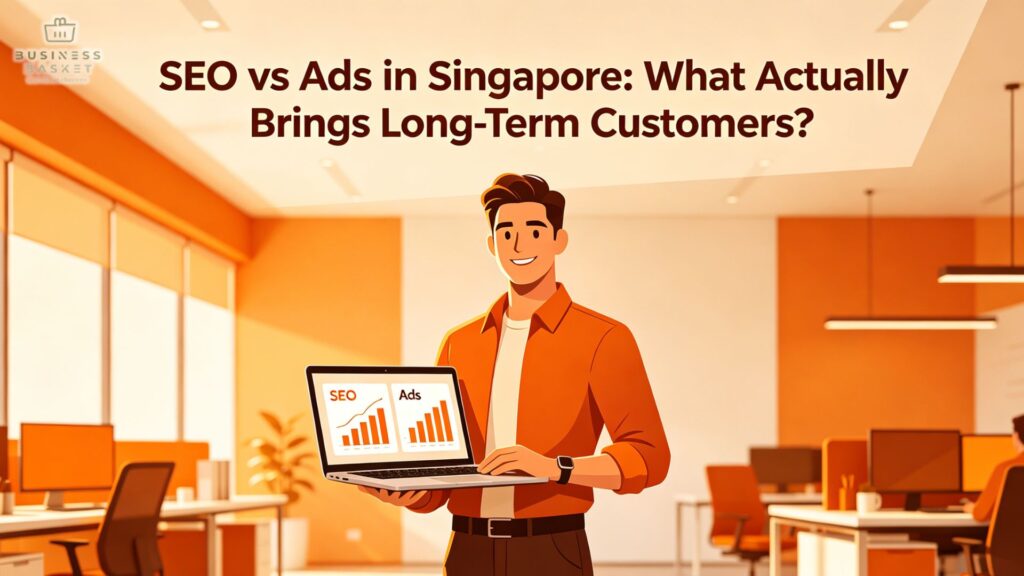
For many business owners in Singapore, marketing usually narrows down to two main options: Search Engine Optimisation (SEO) or Paid Advertising (Google Ads, Meta Ads, etc.).
Both can generate traffic. But they behave very differently when it comes to cost, sustainability, and long-term customer acquisition.
The real question isn’t “which one works?”
It’s: which one keeps working even when you stop paying?
1. The Core Difference: Renting vs Owning Traffic
Paid Ads = Renting attention
Ads are like renting a shop in Orchard Road.
- You pay → you appear instantly
- You stop paying → visibility disappears
- Costs increase as competition increases
- Traffic is “borrowed”, not owned
In Singapore, where CPC (cost-per-click) is often high in competitive industries (tuition, clinics, aesthetics, renovation), this can quickly become expensive and unstable.
SEO = Owning digital real estate
SEO is more like building a shop that stays on Google’s main street.
- You invest → rankings build over time
- You rank → traffic continues without paying per click
- You compound visibility over months and years
- Leads become more stable and predictable
Instead of “turning on and off” traffic, SEO builds continuous inbound demand.
2. What Singapore Business Owners Usually Experience
Most businesses in Singapore don’t struggle because marketing doesn’t work.
They struggle because:
- Leads are inconsistent
- Referrals are not scalable
- Ads bring spikes, not stability
- Competition keeps increasing bid prices
This creates a cycle:
“We run ads → get leads → stop ads → leads disappear → panic → restart ads”
It feels like growth, but it’s actually dependency.

3. Speed vs Sustainability
Paid Ads: Fast results
Ads are powerful when you need:
- Immediate traffic
- Event promotion
- New product launch
- Testing offers quickly
You can get results in hours or days.
But speed comes with a condition:
you pay for every visitor.
SEO: Slower but compounding returns
SEO takes time—typically weeks to months depending on competition.
However, once rankings stabilize:
- One article can bring traffic for years
- One keyword can generate daily leads
- Authority builds over time
- Cost per lead decreases significantly
Think of SEO as a compounding asset, not a campaign.
4. Cost Structure: Why Ads Feel Unstable
Ads cost structure:
- Pay per click (CPC)
- Pay per impression (CPM)
- Pay per conversion (CPA)
The problem is:
- Costs fluctuate with competition
- Platforms control visibility
- Performance declines without optimization
Even successful ad accounts often face:
- rising CPC
- ad fatigue
- audience saturation
SEO cost structure:
- Content creation
- Website optimisation
- Link authority building
- Technical SEO
Once built, traffic doesn’t reset daily.
Instead of paying for every visitor, you’re investing in ranking positions that accumulate value over time.
5. Trust Factor: Why SEO Converts Better Long-Term
Users behave differently depending on where they find you.
SEO traffic:
- Comes from intent
- Feels more organic and trustworthy
- Higher research mindset
- Better long-term conversion quality
Ads traffic:
- Interruptive by nature
- Often higher intent variability
- Users know it is paid placement
- Trust depends heavily on landing page strength
In many industries, SEO leads tend to have:
- higher intent
- lower acquisition cost over time
- stronger brand recall
6. The Real Strategy: SEO + Ads Together
The mistake is thinking you must choose one.
High-performing Singapore businesses usually combine both:
Ads for:
- Immediate leads
- Market testing
- Seasonal campaigns
SEO for:
- Long-term lead generation
- Authority building
- Reducing dependency on ad spend
A balanced model looks like this:
- Ads = short-term fuel
- SEO = long-term engine
7. When SEO is the Better Choice
SEO becomes especially powerful when:
- You want consistent inbound leads
- You are tired of rising ad costs
- Your business relies on search intent (services, education, healthcare, B2B)
- You want long-term brand authority
If your goal is stability, SEO is not optional—it becomes foundational.
8. When Ads Are the Better Choice
Ads make more sense when:
- You are launching something new
- You need fast validation
- You have strong margins
- You are running promotions or time-sensitive offers
But ads should be treated as a switch, not the entire system.
SEO Courses in Singapore: Turning Knowledge into Lead Generation Skills
Many business owners and career switchers are now investing in structured learning like an SEO course Singapore program to understand how search visibility actually works.
A strong SEO course typically covers:
- Keyword research (how customers actually search)
- On-page optimisation (how Google reads your website)
- Content strategy for ranking
- Local SEO for Singapore businesses
- Backlink SEO strategies for authority building
- Conversion optimisation (turning traffic into enquiries)
The goal is not just theory—it is to build a system where your business can consistently appear on Google when customers are actively searching.
Learning SEO in Singapore with SkillFuture Support
One of the key advantages for learners in Singapore is that many structured training programs are eligible for SkillFuture grant support.
This means you can potentially:
- Offset course fees using SkillFuture credits
- Learn SEO without heavy upfront cost
- Upskill while running your business or switching careers
For business owners, this is especially valuable because it turns SEO from a “technical mystery” into a practical, learnable business growth skill.
Conclusion: What Actually Brings Long-Term Customers?
In Singapore’s competitive digital landscape:
- Ads bring speed
- SEO brings stability
- Both bring growth—but only one compounds
If your goal is long-term customer acquisition, predictable leads, and reduced dependency on rising ad costs, SEO is the system that continues working even when marketing spend slows down.
Ads can start the fire.
SEO keeps it burning.