

In any business setting—especially in networking groups where conversations move fast, personalities differ, and everyone has their own goals—it’s easy to feel hurt, overlooked, or misunderstood.
Many professionals search daily on Google for questions like:
-
“How do I stop taking things personally at work?”
-
“How do I stay confident during networking?”
-
“Why do I feel sensitive in business meetings?”
If you’ve ever left a networking event thinking, “Was that person ignoring me?” or “Did I say something wrong?”, you’re not alone.
Taking things personally is a human reaction… but an unhelpful business habit.
Here’s a structured guide on how to stop taking things personally in business networking—so you can show up confidently, build relationships effectively, and stay focused on your goals.
1. Understand That Everyone Has Their Own Agenda (It’s Not About You)
In networking groups, people aren’t ignoring you—they’re simply thinking about:
-
Who they need to talk to
-
Their business problems
-
Their limited time
-
What value they can gain from the event
Most reactions are shaped by their mindset, not your worth.
When you realise this, conversations feel less like judgment and more like strategy.
Reframe:
“They didn’t respond because they’re busy—not because my idea is bad.”

2. Clarify Before You Assume
So many misunderstandings happen because we fill in the blanks with our own fears.
If someone seems cold, rushed, or uninterested, ask yourself:
-
“Is this fact or assumption?”
-
“Did they actually say something negative?”
90% of the time, you’ll find the hurt came from interpretation, not intention.
3. Know the Three Types of People in Networking Rooms
When you walk into a business event, you’ll usually meet:
(A) Task-Oriented People
They talk fast, get to the point, and don’t smile much—not because they dislike you, but because they operate efficiently.
(B) Social Connectors
They’re warm, friendly, and chatty. They make everyone feel included.
(C) Quiet Observers
They participate slowly because they need time to open up.
Recognising these differences helps you detach emotionally and communicate more strategically.
4. Build Your Emotional Buffer Before Any Networking Event
Professional detachment is not about being cold—it’s about having a buffer between you and people’s behaviour.
Before attending a session:
-
Remind yourself: “I’m here to learn and connect, not to be liked by everyone.”
-
List 1–2 specific goals for the event.
-
Accept that not every conversation will lead somewhere.
When you enter with purpose, you react less personally.

5. Don’t Measure Worth by Response Time or Tone
In business networking groups (especially WhatsApp, Telegram, Facebook groups):
-
People may reply late
-
Some responses may be short
-
Some may not respond at all
These are not personal attacks—they’re a reflection of people’s schedules and priorities.
Your value is not tied to:
-
how fast someone replies,
-
how long their message is, or
-
whether they accepted your proposal.
6. Ask Better Questions That Reduce Misinterpretation
Instead of thinking:
“Why do they not like my idea?”
Ask:
“What feedback can help me position this better?”
Instead of thinking:
“Am I bothering them?”
Ask:
“Is this the right timing or platform to discuss this?”
Curiosity removes emotion.
Emotion adds stories that may not exist.
7. Build Confidence Through Clarity
A lot of people take things personally because they’re unsure about:
-
their offer
-
their pitch
-
their business direction
When you are clear, you naturally become less sensitive.
Clarity builds confidence.
Confidence reduces overthinking.
Reduced overthinking prevents taking things personally.
8. Practice the “10-Second Professional Pause”
When something triggers you, pause and ask:
-
What exactly was said or done?
-
What meaning did I add to it?
-
Is this a business situation or an emotional reaction?
This 10-second pause stops you from spiraling into self-blame or defensiveness.

9. Shift From “Approval Mode” to “Value Mode”
You’re not at a networking event to be approved.
You’re there to:
-
exchange value
-
grow connections
-
build visibility
-
collaborate
-
learn
-
offer help
When you lead with value, rejection feels less personal because you’re not chasing validation—you’re creating opportunities.
10. Give Others the Same Grace You Want for Yourself
Everyone has off days.
Someone might be:
-
stressed from work
-
overwhelmed
-
introverted
-
dealing with personal challenges
-
distracted
-
juggling tasks
Don’t internalize what isn’t yours.
The more grace you give, the easier it becomes to stay emotionally neutral in business environments.
11. When Group Chats Trigger You: Not Everything Is Directed at You
Business networking groups—WhatsApp, Telegram, Facebook Groups—can be emotionally tricky.
You join with excitement… then suddenly:
-
A comment feels rude
-
A rule sounds like it applies to you
-
Someone’s message feels like criticism
-
The tone seems harsh
-
You feel excluded because your message got ignored
This happens to many professionals (more often than they admit).
But here’s the truth:
Group chats are rarely personal. They are structured environments, not emotional spaces.
Here’s how to handle it.
A. When Someone’s Message Affects You Personally
Sometimes a participant may say something direct or blunt—especially in mixed business communities where different communication styles exist.
When this happens:
1. Assume Neutral Intent First
Many people type fast.
They don’t think about emojis, tone, or softness.
Their message may sound sharper than intended.
Instead of thinking:
“They’re attacking me.”
Try:
“That message may not be targeted at me. Let me re-read it without emotion.”
2. Re-read the Message as If It Were Sent to Someone Else
This is a powerful mental trick.
If the message wouldn’t offend you when directed at someone else, the emotional reaction is coming from interpretation—not the message itself.
3. Respond Factually, Not Emotionally
If you must reply, use neutral language:
-
“Thanks for pointing that out.”
-
“Got it, I’ll take note.”
-
“Understood.”
Short, calm replies protect your professionalism and prevent miscommunication.
B. When Group Rules Make You Feel Targeted
Group rules—such as “No self-promo,” “No spamming,” or “Send details before posting”—can feel like:
-
You’re being policed
-
You’ve done something wrong
-
You’re being singled out
But the reality?
Rules are created based on group history, not your personal behaviour.
Someone before you probably broke a rule.
Someone abused a privilege.
Someone caused issues in the past.
You’re simply reading the results.
How to handle it:
1. Remember: Rules Apply to Everyone
Even if it sounds like it’s aimed at you, it’s actually aimed at maintaining quality for the whole group.
2. Don’t Internalize Reminders
If an admin says:
-
“Please avoid spamming”
-
“Kindly keep posts relevant”
They’re not scolding you—they’re keeping the group functional.
3. Clarify If Needed (Professionally)
If unsure whether your post fits the rules, simply ask:
“Just to check, is it okay if I share this here?”
It shows respect and prevents misunderstandings.
Admins appreciate clarity far more than silence or guessing.
C. Understand the Hidden Dynamics of Group Chats
Group chats have unique behaviors:
-
Some members are more active
-
Some only read and never reply
-
Some network privately instead of in the group
-
Some prefer concise messages
-
Some enjoy long discussions
If someone doesn’t respond to your message, it’s not a rejection.
It’s normal group behavior.
Sometimes people see messages while:
-
driving
-
in a meeting
-
feeding kids
-
rushing work
-
half-asleep
And they intend to reply but forget.
It’s not personal—it’s real life.
D. The Most Important Rule: Don’t Let Group Energy Control Your Worth
You’re in the group to:
-
learn
-
network
-
access opportunities
-
exchange value
-
stay connected
You’re not there to:
❌ be validated
❌ read people’s tone
❌ take rules personally
❌ interpret every message emotionally
Your business identity should come from:
-
your expertise
-
your value
-
your consistency
-
your professionalism
—not from group chat tones or reactions.
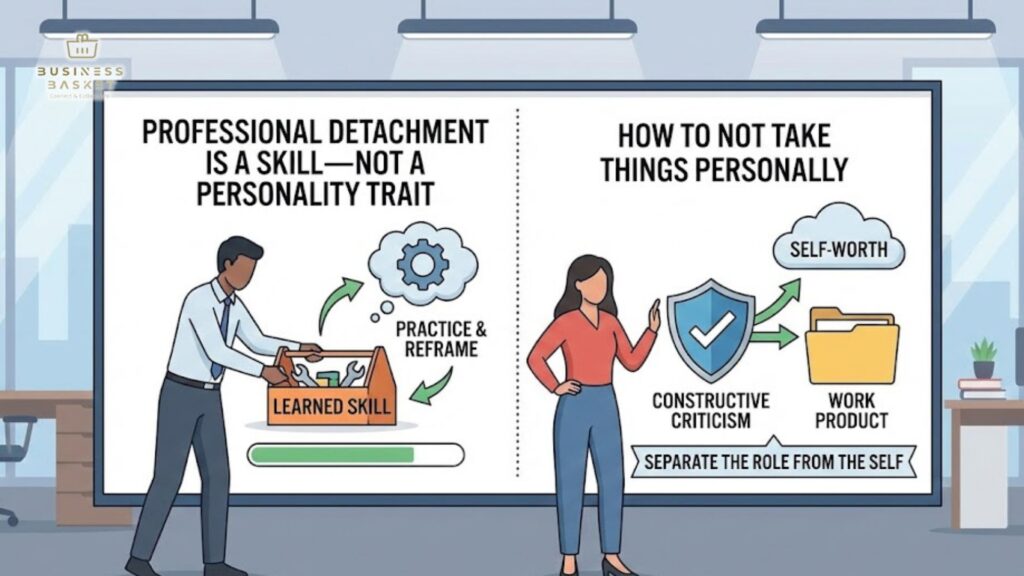
Conclusion: Professional Detachment Is a Skill—Not a Personality Trait
Not taking things personally is one of the most powerful business skills you can develop.
It helps you:
-
communicate better
-
face challenges without fear
-
stay focused
-
build long-lasting relationships
-
grow as a leader
And most importantly—
it frees you from emotional exhaustion, allowing you to enjoy business networking as a space for growth, not judgment.