

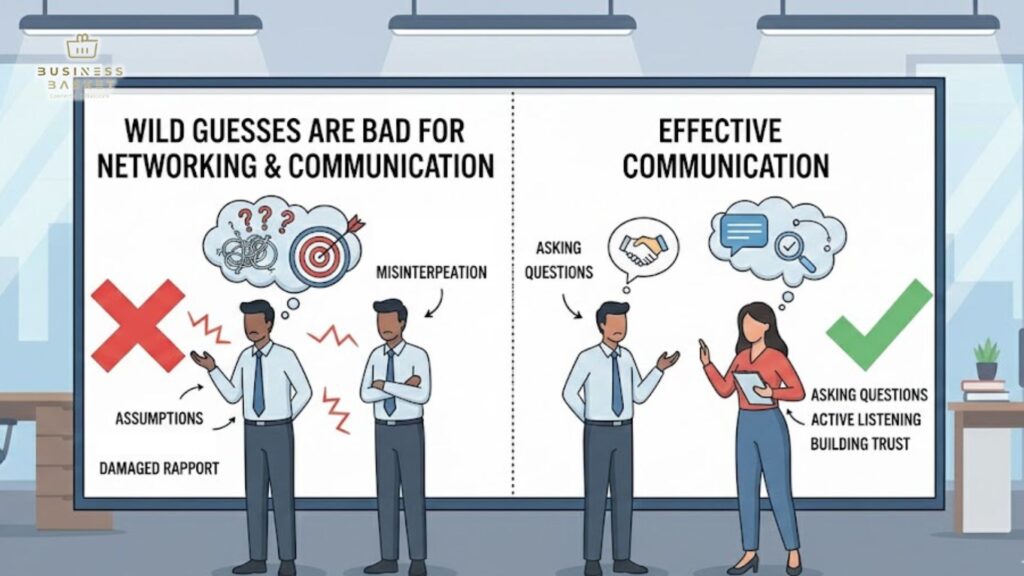
Networking and communication are built on trust, clarity, and credibility. Yet, many people fall into the habit of making wild guesses—offering opinions, assumptions, or advice without sufficient understanding. While it may feel harmless, wild guesses can harm your relationships, reputation, and confidence over time.
1. The Pain of Wild Guesses
Wild guesses often lead to frustration and miscommunication:
-
Loss of credibility: People may see you as careless or uninformed.
-
Confusion in conversations: Incorrect assumptions can derail discussions or cause misunderstandings.
-
Missed opportunities: Instead of creating meaningful connections, you risk being overlooked or distrusted.
-
Personal stress: Guessing can leave you anxious, especially if your assumptions are challenged.
Not being able to communicate clearly before assuming or speaking often stems from a fear of silence or wanting to appear knowledgeable. Yet this habit can make networking feel draining rather than rewarding.
2. Why Mindset Matters
Your mindset shapes how you approach conversations. A fixed mindset may push you to guess in order to “appear smart,” whereas a growth mindset embraces curiosity, learning, and authenticity. By shifting your mindset, you can reduce the urge to guess and instead communicate more effectively.
3. How to Shift Your Mindset
-
Embrace curiosity over appearing smart: Focus on asking questions and learning rather than rushing to answer.
-
Value clarity over speed: It’s okay to pause, reflect, and respond thoughtfully. Silence is not a weakness—it’s a tool for accuracy.
-
Admit uncertainty confidently: Saying “I’m not sure, but I’ll find out” shows honesty and builds trust.
-
See mistakes as learning opportunities: Each incorrect guess teaches you how to approach similar situations better next time.
-
Practice intentional communication: Think about the purpose of your contribution: Is it helpful, accurate, and relevant?
4. Learning and Improving
-
Prepare ahead: Research topics, companies, or people before meetings.
-
Listen actively: Understand fully before responding.
-
Reflect on past interactions: Identify where guesses caused issues and how to respond differently next time.
-
Seek feedback: Ask trusted colleagues or mentors how your communication could be clearer.
-
Take small steps: Gradually replace assumptions with questions, pauses, and thoughtful responses.
The Bottom Line
Wild guesses may seem harmless, but they can erode trust, credibility, and connection over time. By shifting your mindset from “I must have an answer” to “I aim to understand,” you can communicate with clarity, authenticity, and confidence. Learning to pause, ask, and reflect not only improves your networking results but also makes your interactions far more meaningful and rewarding.